
Material-led
Method selected for the actual stone and finish.
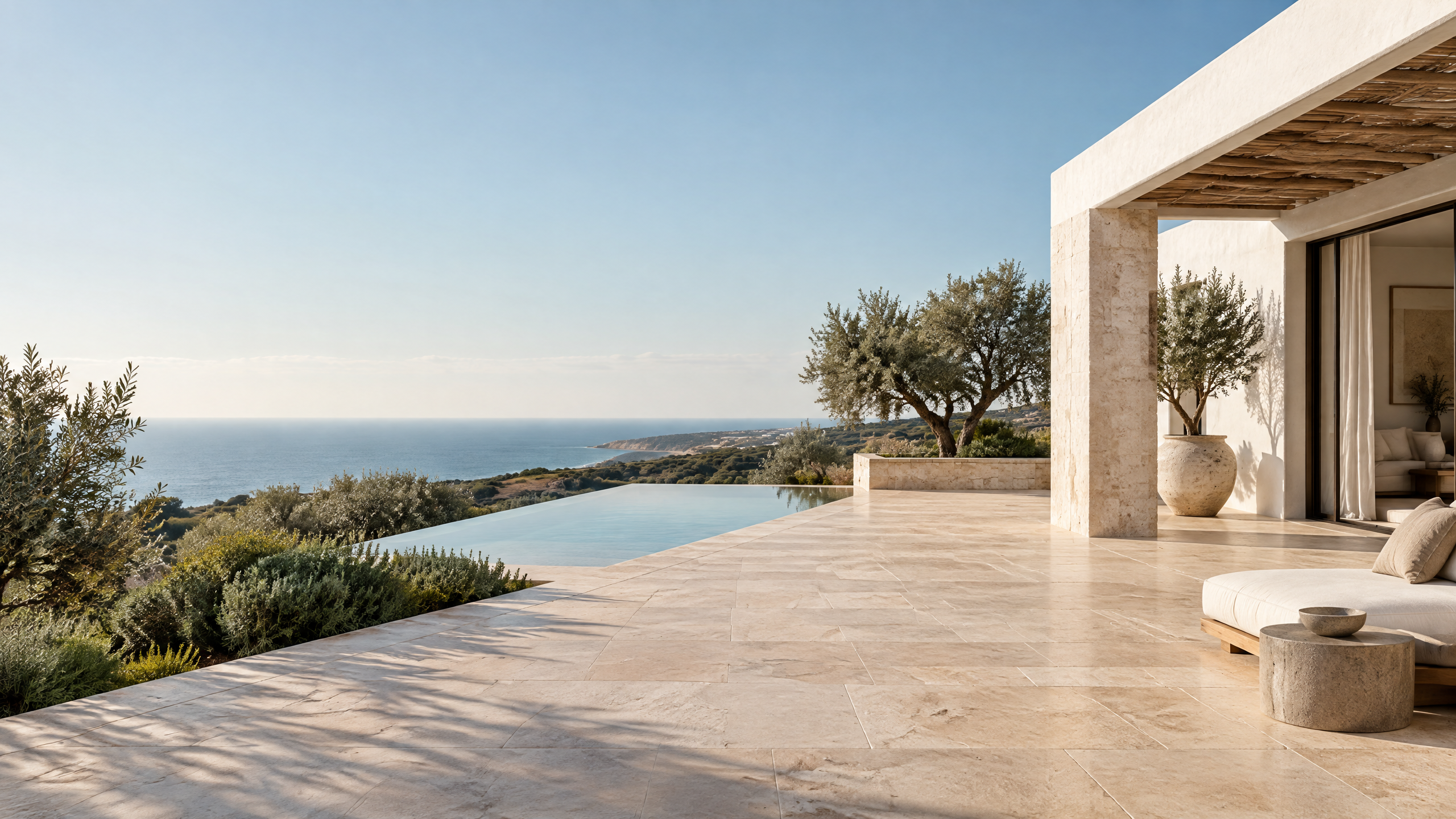
Salt air, sun, sand and intensive use leave their mark on limestone, marble and terracotta. SteinWert assesses the material before defining a precise treatment for your property.
Natural stone is not a uniform material. Limestone, marble, granite, travertine, slate and terracotta react differently to moisture, chemistry and mechanical treatment. That is why every SteinWert project begins with a careful assessment of the stone, finish, joints, previous care products and visible damage.
In Algarve properties, mineral deposits, UV exposure, fine sand, pool water and sea air can create dull areas, staining or uneven surfaces. Cleaning is only the right solution when it respects the existing substance. Where etching, scratches or structural damage are present, honing, polishing or repair may be the more responsible route.
Method selected for the actual stone and finish.
Realistic scope, access and result agreed in advance.
Cleaning, care and restoration considered together.
Removal of embedded dirt, unsuitable care films and use-related deposits with a material-compatible process.
Controlled resurfacing where cleaning alone cannot correct etching, scratches or an uneven finish.
Object-specific protection and a practical care concept for interiors, terraces and pool surrounds.
Planned stone care for hotels, hospitality, retail and professionally managed properties.
Select your property context for a focused starting point. The exact method, scope and recommended maintenance cycle are confirmed only after technical review.
Photos, use, approximate area and location establish an informed first view.
Material, finish, deposits and risks are checked before a method is defined.
Cleaning, restoration or protection is specified for the actual surface.
Practical product, method and escalation guidance supports everyday care.
Condition and next steps are recorded; any cycle remains a technical recommendation, not a guarantee.
Download the concise partner overview for real-estate agencies and property managers working with villas, listings and holiday rentals in the Algarve.
Your details are sent to SteinWert so we can provide the guide and respond to this request.
You share location, approximate area, use and clear overview and detail photographs.
We identify the likely material, condition, risks and whether an on-site test area is required.
Equipment, chemistry, working sections, drying and protection are specified for the surface.
The work is completed with a final check and clear recommendations for ongoing care.
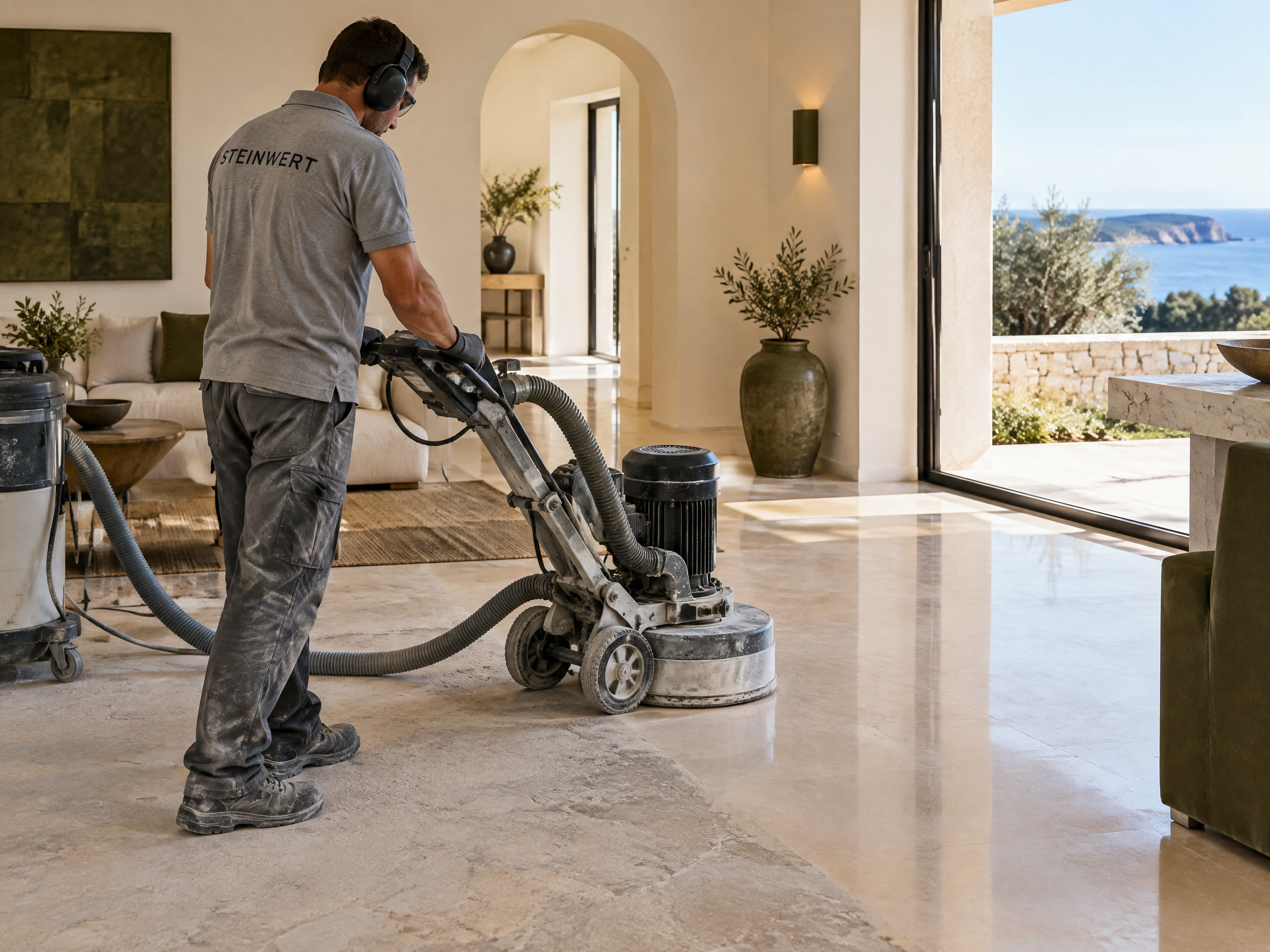
We assess natural and mineral surfaces in private residences, villas, hotels, restaurants, entrances, staircases, patios and pool areas.
Terrazzo and engineered stone are not natural stone, but can be assessed within the same professional surface review.
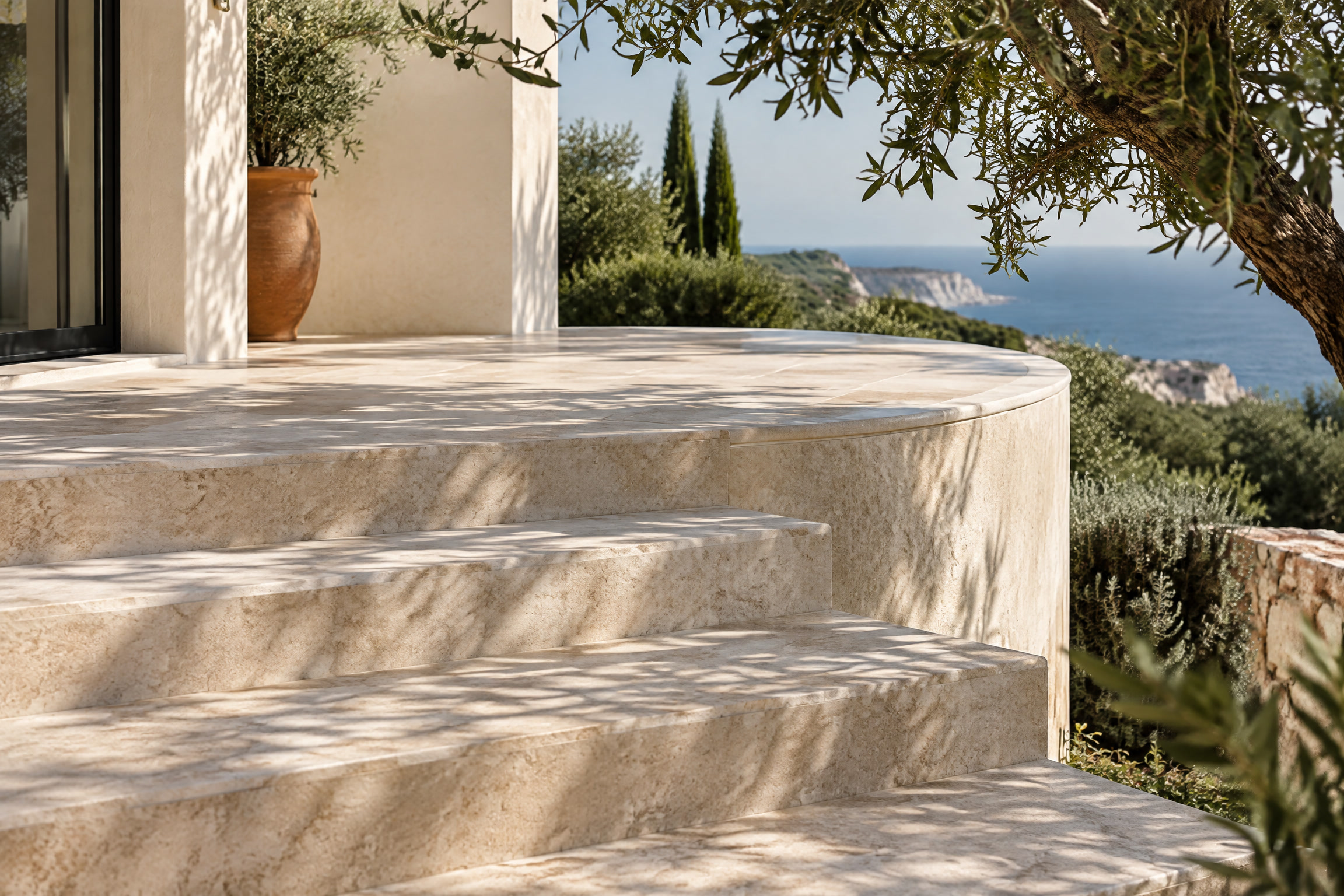
Projects can be assessed throughout the Algarve, including Lagos, Portimão, Albufeira, Loulé, Vilamoura, Quinta do Lago, Vale do Lobo, Faro, Tavira and surrounding areas. A project is only confirmed after technical and logistical review; no local office or automatic response time is claimed.
These location-specific profiles show how SteinWert would approach typical stone surfaces across the Algarve — from pool surrounds to entrance halls.
The images are illustrative project concepts, not yet published SteinWert client references. Completed local work will only be shown with verifiable project details and approval.
A credible square-metre rate cannot be given without knowing the material and condition. Cost depends on stone type, finish, staining, old coatings, joints, accessibility, water and power supply, furnishings, working hours and the desired result.
After receiving photographs and property details, SteinWert determines whether a remote first assessment is sufficient or an on-site inspection or test area is advisable. A written proposal follows once the technical scope is clear.
Practical answers on Atlantic salt air, intense UV, hard water, pool chemistry and seasonal moisture.
The cost depends on stone type, finish, condition, access, area and the intended result. SteinWert first reviews photos and property data, then clarifies whether an inspection or test area is needed before preparing a transparent proposal.
No. The Algarve is presented as a project region, not as a branch. Each enquiry is checked for technical suitability, project size, scheduling and logistics before any commitment is made.
Typical enquiries include limestone, marble, granite, travertine and slate, as well as terracotta, terrazzo and engineered stone. The exact finish and construction are just as important as the material name.
Yes, subject to assessment. Exterior stone in the Algarve may be affected by UV exposure, salt, water, biological growth and unsuitable sealers. Slip resistance, drainage and weather conditions are considered in the method.
No. Deep scratches, etching, spalling, movement or an uneven finish can require honing, polishing, repair or a broader restoration approach. SteinWert separates cleaning from restoration and recommends the technically appropriate next step.
Salt and wind-borne particles can accumulate in pores, joints and textured finishes. Repeated wet-dry cycles may contribute to whitening, dull areas and weakened edges. The deposit and stone condition should be identified before cleaning; a breathable protection concept may be considered only where the material and construction allow it.
High UV exposure and hot surface temperatures can accelerate the ageing of some colour enhancers, resins and sealers, while rapid drying can make an application uneven. Products are therefore checked for UV stability and compatibility, and test areas are carried out under suitable temperature and shade conditions.
Pool edges often combine calcium or silica deposits with chlorine, salt systems, sunscreen and organic residue. Acidic descalers can permanently etch limestone and marble. The deposit must be identified first, then treated with a controlled, material-compatible method while considering runoff and slip resistance.
Seasonal rain, shaded zones, poor drainage and slower drying can encourage algae, biofilm and lichen. Cleaning should remove growth without unnecessarily roughening the stone or washing out joints. Drainage, surrounding planting and future drying conditions are reviewed as part of the recommendation.
Not without checking the stone. Excessive pressure can erode softer limestone, open the surface and damage joints; acidic cleaners attack calcium-bearing stone and can leave permanent pale or rough areas. A small test and controlled pressure, chemistry and dwell time are safer than a universal treatment.
There is no universal interval. Coastal exposure, pool use, shade, irrigation, surface finish and drainage determine the need. An annual visual review before the main-use season is sensible for demanding areas; deep cleaning or renewed protection should only be scheduled when the actual condition justifies it.
Email the property location, approximate area and clear photographs to SteinWert. We will determine the technically sensible next step.
Send project details by email
